OXFORD STREET GOES CAR-FREE
London’s famous shopping street prepares for a major transformation
For years, plans to pedestrianise Oxford Street have been up in the air. Now, however, the project is finally moving forward. From October 2026, a large section of London’s most famous shopping street will enter a live testing phase, with the aim of making it permanently car-free by the end of 2027. Oxford Street is already one of the busiest places in London. At Christmas, it becomes even more crowded, with hundreds of thousands of shoppers filling the pavements. At the same time, buses, taxis, cars, bicycles and scooters compete for space on the road. The new plans are designed to give pedestrians much more room.
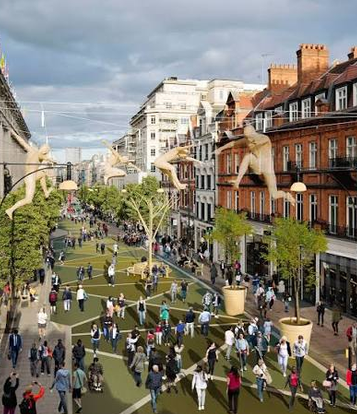
A pedestrian plaza in the heart of London
The Mayor of London, Sadiq Khan, wants Oxford Street to become more than just a shopping street. His vision is to create a “pedestrian plaza” where people can enjoy cultural, sporting and fashion events, as well as new shops and leisure activities. The street has been closed to traffic for short periods in the past, but this project is different. The objective is to make the change permanent. A new organisation, the Oxford Street Development Corporation, was created in August to help organise and manage the project.
When will the changes happen?
From the second half of October 2026, Oxford Street will begin its testing phase. Temporary seating, planters, security bollards and raised sections of the road will be installed. The project will then be tested and reviewed throughout spring 2027. If everything goes according to plan, the pedestrianisation could become permanent by the end of 2027. The section affected will stretch for about 0.9 kilometres, from Orchard Street, near Selfridges, to Great Portland Street. This includes the famous Oxford Circus junction, where Oxford Street meets Regent Street.
Who will be allowed to use the street?
The pedestrianised section will be closed to most vehicles, including:
cars / buses / taxis / bicycles / scooters / pedicabs
There will, however, be some exceptions. Emergency vehicles will still have access. Street-cleaning and refuse-collection vehicles will also be allowed to enter at certain times. Delivery and service vehicles will have access between midnight and 7 a.m. Other traffic will be diverted onto neighbouring streets.
What about the buses?
One of the biggest changes will concern London’s bus network.
Buses will no longer be able to travel along the pedestrianised section of Oxford Street. Existing bus routes will therefore be rerouted, mainly along Wigmore Street and Henrietta Street.
Cyclists will also have to find alternative routes. Cycling will not be permitted on the pedestrianised section, and cyclists will be directed towards nearby streets such as Wigmore Street, Henrietta Place and Margaret Street.
Not everyone is convinced
Although the project has supporters, there are also concerns about its possible impact. Westminster City Council has asked the government for a full environmental impact assessment. One concern is that banning vehicles from Oxford Street could simply move the problem elsewhere.
Neighbouring streets could experience more traffic, increased noise and poorer air quality. In other words, making one street quieter and cleaner could potentially make surrounding streets busier. The project will therefore need to be carefully monitored during the testing period.
A new Oxford Street?
If the plans are successful, Oxford Street could look very different in the future.
Instead of buses, taxis and cars dominating the road, there could be more space for pedestrians, outdoor seating, plants, events and public activities. For one of London’s busiest streets, it could be a major transformation — and perhaps a glimpse of what the city centre of the future might look like.
One thing is certain: Oxford Street is about to become a very different place.
Watch this very interesting video to get a better idea: